
Last Updated: October 23, 2026
Quick Summary
Ranch property investment is the purchase of agricultural land to generate income, build equity, or establish a working operation. Unlike residential real estate, value depends on grazing capacity, water access, soil health, and infrastructure rather than location alone.
- Carrying capacity, measured in animal unit months, determines how many livestock a property can sustainably support year-round.
- Water rights and year-round water sources are non-negotiable; confirm specifics with your county water authority before committing.
- Walk the property in multiple seasons to assess real forage production and carrying capacity beyond a single visit.
- Grazing leases provide income but require clear written terms on stocking rates, maintenance responsibility, and seasonal use.
- Work with a local broker, get pre-approved financing, and hire professionals to review water rights and title before purchase.
Table of Contents
- Understanding Ranch Property Investment Basics
- Evaluating Land Value and Market Conditions
- Creating a Ranch Buyer Checklist
- Assessing Ranch Carrying Capacity for Your Operation
- Grazing Lease Basics and Income Potential
- How Ranch Management Services Support Your Investment
- Planning Your Purchase and Next Steps
- Frequently Asked Questions
Understanding Ranch Property Investment Basics
A ranch property investment is the purchase of agricultural land with the intent to generate income, build equity, or establish a working operation. At Martinez Ranch Management & Real Estate, we’ve spent over 60 years helping buyers understand what separates a sound acquisition from a costly mistake.
Ranch property investment differs fundamentally from residential real estate. You’re acquiring an asset that produces value through grazing, breeding, crop production, or leasing. The land itself, carrying capacity, water access, soil health, infrastructure, determines whether your investment generates returns or drains resources.
Most buyers make the same error: they fall in love with the scenery and overlook the economics. A beautiful property with poor water rights or limited carrying capacity can become a liability fast.
The ranch property investment landscape has shifted. Buyers today include urban professionals seeking a retreat, operators expanding herds, equestrian enthusiasts, and investment groups. Each needs a different property profile and a clear-eyed assessment of what the land can support.
Evaluating Land Value and Market Conditions
Land value in ranch country depends on location, water availability, carrying capacity, infrastructure, and regional demand working together. You can’t evaluate one in isolation.
Start with comparable sales: what similar properties sold for recently, and what acreage, water access, and infrastructure they included.
Consider income potential. A 500-acre parcel with excellent water and established grazing infrastructure can support operations that generate meaningful revenue; the same acreage without water or with poor soil may only support a few head. Income potential directly affects what a buyer should pay.
Infrastructure adds value. Existing fencing, water systems, barns, corrals, and roads increase usability immediately; a bare property requires significant investment before it’s operational.
Market trends affect timing. Interest in ranch property fluctuates with cattle prices, feed costs, land availability, and investor sentiment. Knowing whether you’re in a buyer’s or seller’s market helps you negotiate effectively.
Creating a Ranch Buyer Checklist
Before you make an offer, evaluate the property systematically. A checklist keeps you focused on what matters and prevents emotion from overriding judgment.
Start with location and access. Can you reach the property year-round? Are roads maintained? How far to veterinary services, feed suppliers, and markets?
Next, assess water. This is non-negotiable. Does the property have year-round water sources? Springs, wells, streams, or storage ponds?
Evaluate pasture quality and carrying capacity. Walk the property and look for healthy forage, boggy ground, poor drainage, and invasive species.
Check infrastructure carefully. Deteriorated fencing is expensive to restore. Barns, corrals, and water systems should be functional or repairable. Ask for maintenance records if available.
Understand the property’s history. Has it been in cattle production, equestrian use, or idle? An actively managed property usually shows fewer surprises than a neglected one.
| Evaluation Area | What to Assess | Why It Matters |
|---|---|---|
| Water Access | Year-round sources, rights status, usage restrictions | Determines livestock carrying capacity and operational viability |
| Pasture Quality | Forage health, drainage, problem areas | Affects animal productivity and long-term land health |
| Infrastructure | Fencing, barns, corrals, roads, gates | Reduces startup costs and enables immediate use |
| Access & Location | Road conditions, distance to services, seasonal use | Impacts operational costs and management feasibility |
| History & Use | Previous management, current condition, improvements | Reveals potential issues and ongoing maintenance needs |
Assessing Ranch Carrying Capacity for Your Operation
Carrying capacity is the number of livestock a property can sustainably support over a defined period.
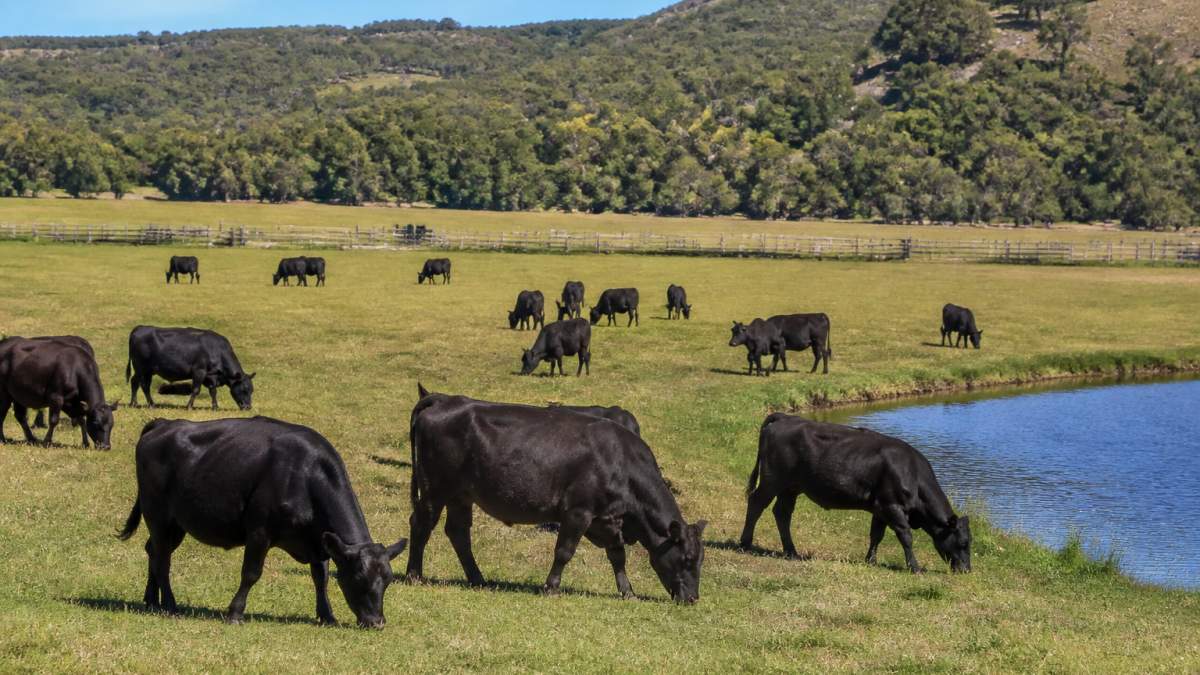
The working unit most operators use is the animal unit, or AU: conventionally a 1,000-pound cow with or without a calf.
Carrying capacity is measured in animal unit months, or AUMs: one AU grazing for one month (Does size matter? Animal units and animal unit months).
Work backward from your goals. To run 150 cows year-round, you need enough pasture, hay ground, or leased range to carry them through the lean season.
Forage production drives the number. It depends on soil type, rainfall, elevation, and growing-season length.
Water sets the ceiling. A pasture with abundant forage but no reliable stock water cannot be fully used.
Don’t assume the previous owner’s stocking rate was optimal. Some run light; others push the land hard.
Walk the property in more than one season if you can. The difference between spring forage and late-summer forage tells you more about real carrying capacity than any single visit.
Our own experience running cattle across these counties shapes how we read a property. Cooley Ranch in Tehama County, 4,160 acres, served as winter range for up to 275 spring pairs. Willow Creek Ranch in Siskiyou County, 726 acres, carried 150 cows year-round. Lava Lakes Ranch in Siskiyou County, 5,329 acres, ran 200-plus pairs year-round with horse barns. Those are different answers to the same question, and the difference is forage, water, and season, not acreage alone. If you want to talk through carrying capacity for a specific property, see our ranch management services or browse cattle ranches for sale.
Grazing Lease Basics and Income Potential
A grazing lease lets you earn income from land you own but don’t actively operate. Understanding how leases are structured helps you judge whether leasing fits your investment.
Most grazing leases specify four things: the number and class of animals, the season of use, the pasture or acreage included, and the payment terms. Some leases are priced per animal unit month, others per acre, and others as a flat seasonal fee. The structure matters because it shifts risk. A per-AUM lease ties your income to actual use; a flat seasonal fee gives you predictable income but puts the forage risk on the lessee.
Leases run short-term (seasonal) or long-term (multi-year). Short-term leases offer flexibility and let you re-price as conditions change. Long-term leases provide stable income and let the lessee plan a herd, but they lock you in.
The landowner’s job is not passive.
Consider the operational burden. Will you manage the lease yourself or work with a professional? That is the role our ranch management service fills.
Leasing income alone rarely justifies a ranch purchase unless the property is large or sits in a high-demand grazing area.
A lease also protects the land. Managed grazing keeps forage healthy and reduces fuel loads, which matters where summer fire risk is real.
Lease terms, water use, and land-use rules vary by county and watershed. Confirm the specifics with your county and a water rights attorney before you sign anything.
We have seen how leasing and management play out across these counties. If you own a ranch and want help structuring a grazing lease or finding a qualified lessee, our ranch management team can help. If you are still looking for the right property, start with our cattle ranches for sale or current listings.
How Ranch Management Services Support Your Investment
Ranch management services handle day-to-day operations, grazing decisions, water management, and lessee coordination. For absentee owners or operators managing multiple properties, professional management protects your investment.
A good management service monitors forage and adjusts stocking rates seasonally, maintains water systems, fencing, and infrastructure, and coordinates with lessees to ensure compliance. That active stewardship prevents small issues from becoming expensive repairs.
For cattle operations, management includes breeding decisions, health monitoring, and market timing. Professionals track market conditions and advise on when to sell or hold cattle.
Remote owners benefit most. If you live elsewhere and visit occasionally, you need someone on-site who understands the property and responds to problems quickly.
At Martinez Ranch Management & Real Estate, we help clients decide whether professional management makes sense. Some owners operate their own properties successfully; others get better results by delegating to experienced operators.
Planning Your Purchase and Next Steps
A ranch property investment requires planning beyond the purchase itself. Think through your timeline, financing, and long-term vision before you start looking.
Define your investment thesis. Are you buying to operate cattle? Create an equestrian facility? Generate leasing income? Hold for appreciation?
Get pre-approved for financing before you search. Lenders evaluate ranch purchases differently than residential mortgages.
Work with a broker who knows your local market. A specialist knows which properties fit your needs and what’s coming to market.
When you find a property, walk it multiple times, in different seasons if possible. Talk to neighbors about water, wildlife, and operational history.
Confirm all assumptions with professionals. Have a water rights attorney review water access and usage. Discuss financing terms with your lender.
Buying a ranch property requires more than finding land you like. It demands systematic evaluation of carrying capacity, water rights, infrastructure, and income potential.
We at Martinez Ranch Management & Real Estate work with buyers across our region to find properties that match their goals and budgets. If you’re ready to explore ranch property investment, reach out.
Frequently Asked Questions
What should you consider before investing in a ranch property?
Before committing to a ranch property investment, identify your primary purpose: cattle operation, horse facility, seasonal grazing, or long-term appreciation. Assess your experience level and whether you’ll manage the property yourself or hire professional help. Review water availability, pasture quality, and infrastructure condition. Budget for ongoing maintenance, insurance, and property taxes. Consider your exit strategy and how the property fits your long-term financial goals.
How do you know if a ranch property is fairly valued for the Northern California market?
Evaluate comparable properties that sold recently in your target area, considering acreage, water access, pasture condition, and improvements. Market value depends on regional demand, land productivity, and proximity to services. Work with a broker experienced in ranch sales who understands local conditions. Compare price per acre across similar properties, but remember that a larger, well-watered parcel may command different pricing than a smaller, undeveloped one. Ask your lender or a real estate professional to assess whether the asking price aligns with recent sales data in your county.
What is the difference between buying ranch land and buying a working ranch?
Ranch land is raw acreage with minimal or no improvements; you build infrastructure and operations from scratch. A working ranch includes established pasture, water systems, barns, corrals, fencing, and often an operating herd or business. Working ranches command higher prices but offer immediate income potential and proven carrying capacity. Raw land requires more upfront investment in improvements but may offer lower entry cost. Choose based on your experience, capital, and timeline. Some buyers prefer raw land for customization; others want an established operation ready to run.
How can a grazing lease fit into a ranch investment plan?
A grazing lease allows you to generate income by renting pasture to other operators while you own the property. This works well if you don’t plan to run your own herd or want to offset holding costs. Lease terms, grazing rates, and liability vary by agreement and location. A grazing lease can improve cash flow during the early years of ownership or provide steady income on land not suited to your primary operation. Discuss lease structure and obligations with your broker or attorney to ensure the arrangement protects your property and aligns with your investment timeline.
What records should you review when considering a ranch property?
Request water rights documentation, easement agreements, and proof of access. Review recent property tax assessments and any outstanding liens or encumbrances. Ask for herd records if it’s a working ranch, including carrying capacity history and breeding data. Inspect fencing, water systems, and building condition. Confirm that utilities and road access are reliable. Ask about past grazing patterns, seasonal challenges, and any environmental or wildlife restrictions. These records help you understand the property’s true operational capacity and any hidden liabilities.
What role does ranch management play after you buy a property?
Professional ranch management handles daily operations, herd care, pasture rotation, water management, and maintenance. This is essential if you live off-site or lack livestock experience. A management team monitors carrying capacity, adjusts grazing plans seasonally, and maintains infrastructure. They can also help with lease arrangements if you want to generate income from underutilized pasture. Management services reduce your hands-on burden and help protect your investment through sound operational practices. Discuss management options before purchase so you understand costs and availability in your area.
