
Table of Contents
- What Makes a Northern California Equestrian Property Stand Out
- Horse Property Acreage Requirements and Land Characteristics
- Horse Barn and Arena Features to Prioritize
- Horse Property Zoning and Land Use Considerations
- Understanding Regional Variations Across Northern California
- Horse Property Buying Checklist: Essential Due Diligence
- Why Expert Guidance Matters When Selecting Equestrian Property
- Frequently Asked Questions
Last Updated: October 7, 2026
What Makes a Northern California Equestrian Property Stand Out
The best Northern California equestrian properties combine land characteristics, quality facilities, and practical considerations. At Martinez Ranch Management & Real Estate, we’ve guided clients, and standout properties share common traits: adequate acreage, proper pasture management, reliable water access, and thoughtful facility design.
What separates a mediocre horse property from an exceptional one comes down to details most buyers overlook: terrain, drainage, and fencing condition.
The best Northern California equestrian properties also match your use case. Breeding, boarding, training, and personal riding each demand different facilities and land configurations.
Horse Property Acreage Requirements and Land Characteristics
Most equestrian experts recommend 1 to 2 acres per horse for pasture-based operations, assuming good forage and rotational grazing. Northern California’s diverse climate zones mean requirements vary by region.
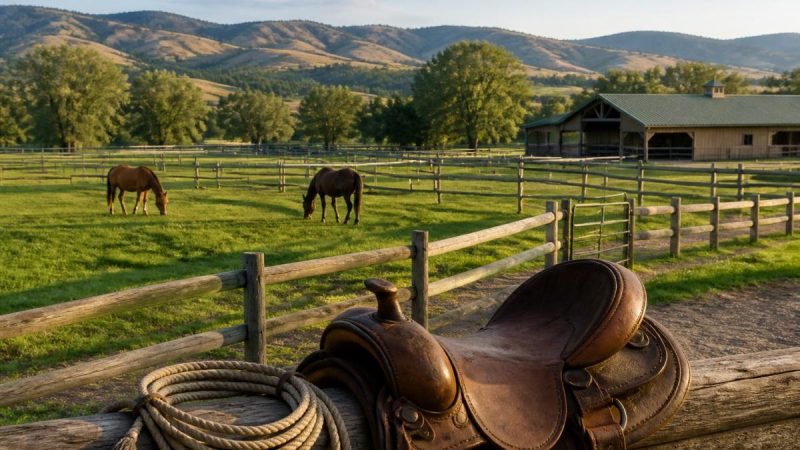
Rolling hills and varied terrain are common across Northern California horse properties.
Water access is non-negotiable. Properties with springs, wells, or year-round creek access command premium value; seasonal sources create challenges during Northern California’s dry months.
Steep slopes complicate fence installation, drainage, and vehicle access; gentler terrain with some elevation variation works best.
| Acreage Range | Best For | Key Considerations |
|---|---|---|
| 1-2 acres | 1-2 personal riding horses | Requires rotational grazing, good drainage |
| 3-5 acres | Small boarding operation (3-5 horses) | Pasture rotation critical, water essential |
| 5-10 acres | Breeding operation or larger boarding | Multiple pasture paddocks, shelter areas |
| 10+ acres | Commercial operation or large private facility | Diverse terrain, water redundancy |
Soil quality and pasture condition reveal long-term viability: established, healthy pasture requires less investment than bare land.
Horse Barn and Arena Features to Prioritize
A functional barn separates a manageable operation from daily frustration. The best Northern California equestrian properties feature barns with adequate stall space, proper ventilation, and thoughtful layout.
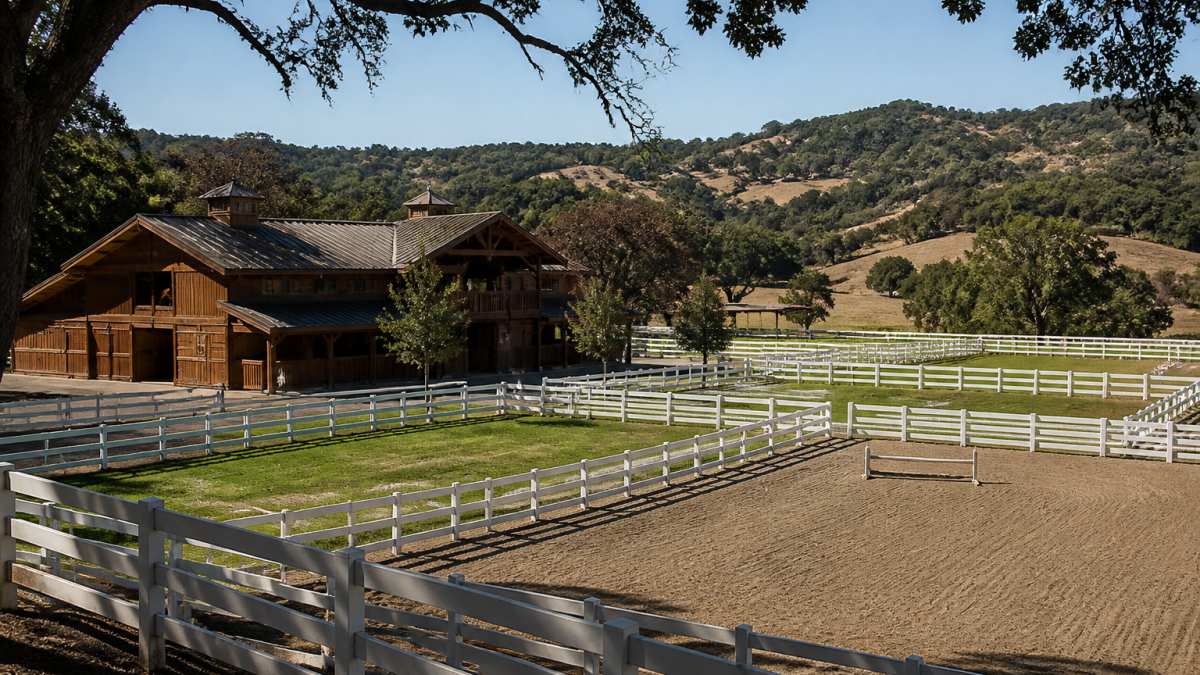
Ventilation prevents respiratory issues common in poorly designed facilities. Look for cupola vents, open-air designs, or passive ventilation; cross-breeze positioning reduces ammonia buildup.
Arena quality directly impacts usability. Proper footing, typically sand, rubber, and fiber, drains well and provides a consistent surface.
Fencing condition and type affect safety and resale value.
Storage for hay, grain, and equipment prevents weather damage and pests.
Horse Property Zoning and Land Use Considerations
Zoning regulations directly impact what you can do with your horse property.
Before purchasing, verify zoning allows your intended use. If you plan a boarding operation, ensure the property is zoned for commercial equestrian activity.
Building permits and septic regulations vary by location, and some existing structures don’t meet current codes. Adding or renovating facilities requires permits, so budget for these costs early.
Water rights and easements create hidden complications. Some properties have shared water access or rights held by neighbors, and easements allow others to cross your land.
Wildfire risk has become increasingly important for Northern California properties.
Understanding Regional Variations Across Northern California
No single region wins for every equestrian buyer. The right area depends on how you keep horses, how often you ride, how far you’ll commute, and how much risk and upkeep you’ll absorb. The table below compares the zones buyers most often consider.
| Region | Climate & Riding Season | Terrain & Soil | Water Reality | Wildfire & Insurance | Services & Commute | Best For |
|---|---|---|---|---|---|---|
| Coastal / marine-influenced | Mild year-round, fog and higher humidity, limited summer heat | Rolling to steep, often heavier clay soils that hold moisture | Generally more annual rainfall; wells and springs common but summer drawdown possible | Varies by microclimate and fuel load; coastal fog can moderate but not eliminate risk | Closer to urban job centers in places; veterinary and farrier coverage varies by town | Riders who want a long riding season and mild temperatures |
| Inland valleys | Hot, dry summers; distinct wet and dry seasons | Flatter to gently rolling, more varied soils, some excellent loam | Relies heavily on irrigation, wells, and stored water | Higher summer heat and dry-fuel exposure in many areas | Often closer to services and larger towns | Boarding, training, and operations that need flat, usable ground |
| Sierra foothills | Shorter growing season, cooler nights, snow possible at elevation | Steeper, rockier, shallower soils that complicate footing and construction | Snowmelt and wells; summer reliability varies widely by parcel | Among the higher-risk zones in many foothill areas; defensible space and insurance scrutiny are common | Longer drives to services and urban centers | Buyers who want space, privacy, and trail access and accept seasonal limits |
| Farther-north interior | Cooler overall, shorter hot season, longer winters | Mixed; some open grassland, some timbered | Rainfall generally more reliable than the interior south, but parcel-level water still varies | Timber and fuel load can raise risk in forested pockets | Fewer services; longer hauls for specialized equine care | Buyers prioritizing land value and quiet over convenience |
A few practical patterns cut across every region:
- Water is the deciding variable, not acreage. A 20-acre parcel with a weak or shared well is harder to operate than a 5-acre parcel with a strong, tested well and storage. Ask for well yield, storage capacity, and any shared-water agreements in writing.
- Wildfire risk now drives insurability. In higher-risk zones, carriers increasingly require defensible space and may decline coverage outright. Get insurance quotes before you remove contingencies, not after.
- Services thin out fast as you move away from towns. Confirm that a veterinarian, farrier, and hay supplier actually serve the specific road, not just the county.
- Commute and riding access trade off. Properties close to job centers and managed trail systems usually cost more per acre; remote parcels save money but add drive time to work, shows, and care.
Match the region to your operation first, then shop listings. A boarding or training business needs flat, well-drained ground, reliable water, and reasonable proximity to clients and services. A personal riding or retirement setup can trade convenience for land, quiet, and trail access.
Regional averages hide parcel-level reality. Two properties a few miles apart can differ sharply in soil, water, and fire exposure. Evaluate the specific parcel, not the region’s reputation.
Horse Property Buying Checklist: Essential Due Diligence
A horse property can pass a standard home inspection and still fail as an equestrian operation. The items below most often surprise buyers after closing, along with how to verify each one before you commit.
1. Zoning, permits, and land-use restrictions
- Confirm the allowed use in writing. Ask the county planning department whether your intended use, personal horses, boarding, training, breeding, or commercial, is permitted by right, requires a conditional use permit, or is prohibited on that parcel.
- Check animal-density rules. Many jurisdictions cap horses per acre or per parcel, and the cap can differ between residential and agricultural zoning. Get the number for the specific parcel.
- Verify non-conforming structures. Existing barns, arenas, and covered stalls may predate current code. Ask whether they are legal non-conforming and what triggers a requirement to bring them up to code.
- Map the permit path for anything you plan to build. New barns, arenas, covered structures, and some fencing may need permits, and setbacks, height limits, and grading rules apply. Budget time and money for approval.
- Review easements and access. Utility easements, shared driveways, and access easements can limit where you build and how you get trailers and hay trucks in and out.
2. Water: supply, rights, and quality
- Test the well and ask for yield data. Request pump tests, static and drawdown levels, and recovery rate. A well that passes on a wet spring day can fail in late summer.
- Understand water rights. In many areas, surface water and even some groundwater use is governed by permits or claims. Confirm what the property is legally entitled to use, not just what it physically can.
- Check storage. Tanks and ponds buffer dry periods and support fire protection. Note capacity and condition.
- Test water quality. Have a sample analyzed for the parameters that matter to livestock, and ask about any history of contamination.
3. Wildfire risk, defensible space, and insurance
- Get an insurance quote early. In higher-risk zones, carriers may decline coverage or require mitigation. A quote, or a refusal, is information you need before contingencies expire.
- Understand defensible-space expectations. Clearing vegetation around structures and managing fuel loads are commonly required, and the specific distance and standards vary. Ask what the local fire authority expects for that parcel.
- Plan for evacuation with horses. Identify routes and destinations. Trailering horses out of a rural area takes time you may not have.
4. Facilities and land condition
- Inspect barns, stalls, and arenas for function, not just appearance. Look at ventilation, drainage, footing depth and composition, and stall size and condition.
- Walk the fencing and gates. Note type, condition, and whether it is safe for horses. Replacement costs add up quickly across a large perimeter.
- Assess pasture and soil. Established, healthy pasture is worth real money; bare or compacted ground needs investment. Ask about rotational grazing history and any soil tests.
- Check drainage and mud management. Look for low spots, French drains, and how the property handles winter water. Poor drainage is one of the most expensive problems to fix.
5. Ownership costs beyond the purchase price
Budget for ongoing expenses, not just the mortgage:
- Facility upkeep, fencing repair, arena dragging and footing replacement, barn maintenance, and equipment.
- Utilities, water pumping, irrigation, and power to outbuildings can be significant on rural parcels.
- Insurance, equine liability, structure coverage, and wildfire-related premiums vary widely by location and mitigation.
- Hay, feed, and bedding, costs scale with herd size and whether you buy in bulk or by the bale.
- Labor and services, farrier, veterinary, and any hired help, plus the cost of hauling to shows or clinics.
Treat due diligence as a sequence: confirm the use is legal, confirm the water is reliable, confirm the property is insurable, then evaluate facilities and land. If any of the first three fails, the rest rarely matters.
Bring in specialists early, a real estate attorney familiar with rural and ranch properties, a qualified equine facility inspector, and a well or water professional. Their findings during the contingency period are your best negotiating leverage.
Why Expert Guidance Matters When Selecting Equestrian Property
Buying horse property differs fundamentally from typical residential real estate. Evaluation criteria are specialized, and the cost of poor facility design compounds over years.
Our team knows what separates a well-designed equestrian facility from one that creates constant headaches.
Many buyers discover problems after closing that cost thousands to fix, poor drainage, inadequate water access, or zoning restrictions that block their intended use.
The market for Northern California equestrian properties moves quickly, and properties that match your needs attract multiple offers.
Finding the right Northern California equestrian property requires balancing location, facilities, zoning, and long-term operational viability.
Frequently Asked Questions
How much acreage do I need for a horse property in Northern California?
Most equestrian properties in Northern California require a minimum of 1 to 2 acres per horse for adequate pasture and turnout space, though this varies based on terrain, water availability, and grazing conditions. Properties with rolling hills and diverse terrain often support horses more efficiently than flat land with poor drainage. Consider whether you plan boarding operations, breeding, or personal use, commercial operations typically need more acreage. Consult with local agricultural extension services to understand carrying capacity for your specific property.
What zoning restrictions should I know about when buying horse property?
Zoning and land-use restrictions vary significantly across Northern California counties and municipalities. Some areas allow equestrian use by right, while others require conditional use permits or have minimum acreage thresholds. County planning departments govern rules around boarding operations, breeding, commercial facilities, and arena construction. Before purchasing, verify zoning classifications, check for deed restrictions, and confirm that your intended use aligns with local regulations. Many properties have agricultural designations that protect equestrian use but may limit residential development.
What barn and arena features are most important for a horse property?
Essential features include a well-constructed barn with proper ventilation, stalls sized for individual horses (typically 12×12 feet minimum), secure fencing designed for equestrian safety, and adequate pasture with access to fresh water. An arena is valuable for training and recreation, ideally 150×300 feet for riding, with proper footing and drainage. Consider shelter options, round pens for groundwork, and storage for hay and equipment. Properties with existing, well-maintained facilities reduce your startup costs and allow immediate use.
What should be on my horse property buying checklist before making an offer?
Inspect water sources and quality, verify fencing condition and safety compliance, evaluate pasture health and drainage, check barn structural integrity and ventilation, confirm utilities and septic systems are adequate, review property history for environmental concerns, verify zoning allows equestrian use, assess wildfire risk and access to evacuation routes, and evaluate proximity to veterinary services and feed suppliers. Have a property inspector experienced with equestrian facilities walk the land with you. Request sales history and previous owner documentation about facility maintenance and any known issues.