
Last Updated: October 28, 2026
Quick Summary
Martinez Ranch Management & Real Estate is a top-rated choice for equestrian property in Northern California, with over 60 years selling and managing ranches across Tehama, Shasta, Siskiyou and Butte counties. We run cattle, know horse-ready land, and help buyers find properties that aren’t on the market yet.
- Rank water first, then fencing, footing and access when judging horse land.
- Ask firms to name specific counties and horse-ready properties they have handled.
- Match the land to your discipline: roping, trail riding, breeding or pleasure.
- A 40-acre parcel beside open country can ride bigger than 200 hemmed-in acres.
- Walk the proposed arena site after rain to find where water stands.
Table of Contents
- What Separates Top-Rated Equestrian Property Firms
- Your Horse Property Search Checklist
- Equestrian Property Features That Decide the Purchase
- Why a Horse Property Broker Beats a General Agent
- Equestrian Facilities and Riding Disciplines: Match the Land to the Use
- Comparing Firms: Questions That Reveal Real Experience
- Start Your Search With Martinez Ranch Management & Real Estate
- Frequently Asked Questions
What Separates Top-Rated Equestrian Property Firms
Martinez Ranch Management & Real Estate has over 60 years of experience selling and managing ranches.
An equestrian property is rural land improved for horse use: pasture, fencing, barns, arenas, and access to riding country.
Here’s what buyers can weigh before they hire anyone:
- Local ranch knowledge in Tehama, Shasta, Siskiyou and Butte counties
- Inventory depth in the specific type of land you want
Your Horse Property Search Checklist
A horse property search checklist can help you consider the parcel’s features. Start with water, then access, then improvements, then the land itself.
Consider these items:
- Water: stock water sources, storage, and how water reaches each pasture
- Access: road quality, year-round entry, and room for trailers and equipment
- Fencing: perimeter and cross-fencing condition, and whether it suits horses
- Barn and shelter: structure condition and how it handles your daily routine
- Pasture: acreage, forage base, and how it holds through the dry season
- Riding country: trails, arena space, and room to work horses
- Utilities: power and phone availability where you’d actually need them
If you’re early in the process, our guide on buying a ranch property in Northern California covers the bigger picture before you narrow to individual parcels. And when you want context on what ranch land in the state generally involves, how much a ranch costs in California is a good next read.
Equestrian Property Features That Decide the Purchase
Features that decide a horse property purchase are water, fencing, footing, and access, in that order. Buyers who rank barn aesthetics first usually end up fixing the basics later.
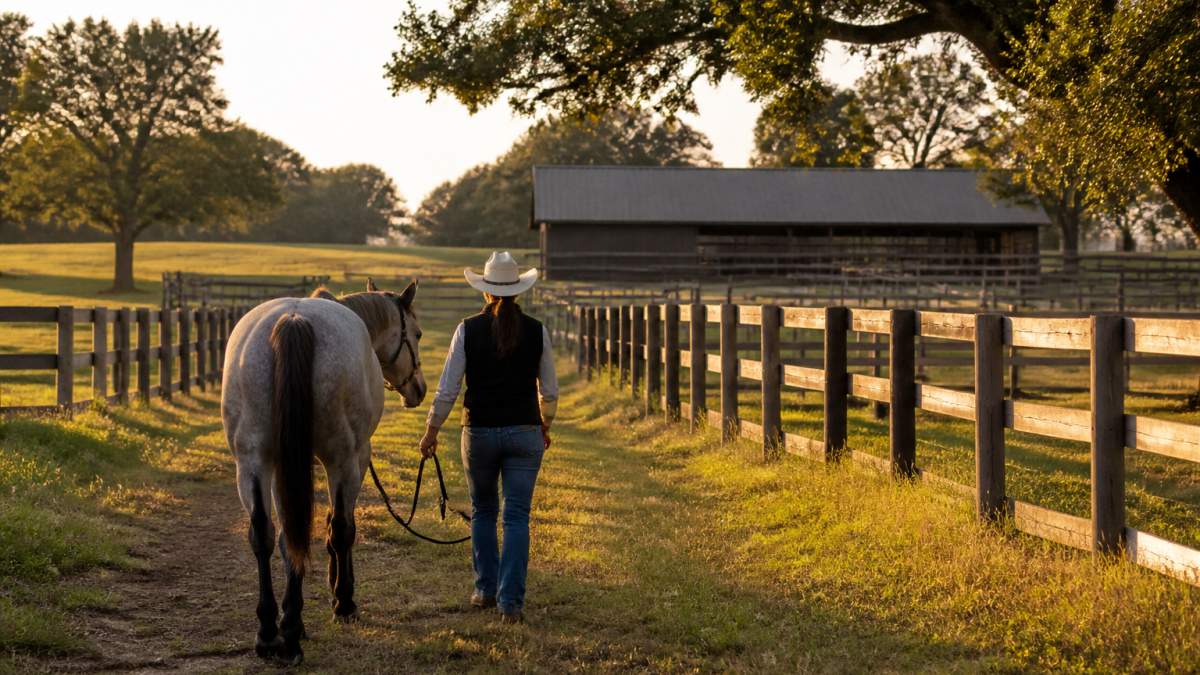
Water tops the list because everything else depends on it. A property with strong wells, storage, and distribution to each pasture is worth more to a horse operation than one with a nicer barn and weak water.
Fencing comes second. Horse fencing has to be safe and repairable, and miles of it are a real commitment. Walk the fence lines yourself and note what needs replacing.
Then look at the land’s natural footing and drainage. Low, boggy corners turn into mud and hoof problems. High, rocky ground wears horses down. The middle ground is what you want.
Our sold Lava Lakes Ranch in Siskiyou County, 5,329 acres running 200-plus pairs year-round with horse barns, is an example of a ranch we have sold. You can see current horse-ready land on our equestrian properties page.
Why a Horse Property Broker Beats a General Agent
A broker who runs cattle and manages ranches reads a property differently. They notice the well that serves only half the pasture. They see the fence that looks fine from the road and isn’t.
We’ve sold ranches from the 726-acre Willow Creek Ranch in Siskiyou County to the 4,160-acre Cooley Ranch in Tehama County, and we run cattle and manage grazing on working operations.
Equestrian Facilities and Riding Disciplines: Match the Land to the Use
Match the land to the riding discipline before you buy, because a property built for one use often fights another. Reining, roping, trail riding, and breeding all want different ground, and in this region, the county you buy in shapes what the land can realistically support.
Here are some uses to consider:
| Discipline or Use | What the Land Needs |
|---|---|
| Roping and reining | Level arena ground, good footing, room for cattle |
| Trail riding | Access to open country and varied terrain |
| Breeding and young horses | Safe fencing, open pasture, shelter |
| General pleasure riding | Solid barn, arena space, manageable acreage |
Arena ground is the feature buyers most often misjudge. A flat, well-drained spot with good footing is worth more than acreage that looks impressive but can’t hold a work pen. Walk the proposed arena site after rain if you can, and look for the low corner where water stands.
Terrain and climate differ by county, and so does the right fit. In Tehama County, the valley floor and foothills offer level ground that suits arena work and irrigated pasture, while the higher country runs hotter and drier in summer. Shasta County stretches from valley pasture up into timber and mountain ground, so trail riders often have more varied terrain to work with, but winter access and road quality vary parcel to parcel. Siskiyou County runs cooler and higher, with summer pasture and mountain country that suits trail and breeding operations, but snow and shoulder-season mud shape how you use the place. Butte County mixes valley and foothill ground, with pasture and oak country that fits general pleasure and breeding setups. None of these is better than the other, they fit different uses.
Access to riding country matters as much as acreage. Ask where you can ride off the property, whether neighboring land is open to you, and how you’d trailer to public ground. A 40-acre parcel next to open country can ride bigger than 200 acres hemmed in by subdivisions.
Facilities should match the daily routine, not the brochure. A barn with a tack room and wash rack saves time every day. An arena with good footing keeps horses sound. Shelters that handle prevailing weather matter more in the higher country than on the valley floor. Rank these against how you’ll actually use the place.
Our Bowman Road Ranch in Cottonwood is a 110-acre property with a roping arena, a good example of land matched to a specific use. You can see the details on the Bowman Road Ranch listing, and current horse-ready land on our equestrian properties page.
Before you commit to a discipline-specific property, spend a morning there during the season you’ll use it most. Summer pasture in Siskiyou County and valley ground in Tehama County feel very different in August and in February.
Comparing Firms: Questions That Reveal Real Experience
Here are questions to ask when comparing firms that find horse land.
Ask how the firm handles a property you find yourself. Buyer representation terms vary, and you want the arrangement clear before you tour anything. Ask who pays whom, what the representation agreement covers, and how the firm handles a parcel that came from your own search. Confirm the details with the firm and, if you want, a real estate attorney, we don’t give legal advice, but we do tell buyers to get the terms in writing.
Consider these topics when you interview firms:
| What to compare | What a strong answer looks like | What a weak answer sounds like |
|---|---|---|
| Counties actively worked | Names specific counties and property types | “All of Northern California” |
| Equestrian transaction history | Counts of horse-ready properties, buyer vs. seller side | General claims about loving horses |
| Representation model | Clear buyer/seller terms in writing | Vague or shifts when pressed |
| Inventory depth | Can name current listings that fit your use | “We’ll find something” |
| Post-sale support | Ranching, grazing, or management background | Nothing after the closing table |
| Regional knowledge | Can compare Tehama, Shasta, Siskiyou, and Butte | Treats the region as one market |
Write the answers down side by side.
If you want to see how a firm thinks before you call, browse the Martinez Ranch blog for articles on ranch buying and management, or look at our current properties to see the kind of land we work with.
Start Your Search With Martinez Ranch Management & Real Estate
Finding the right horse property comes down to matching land with a firm that knows it. Martinez Ranch Management & Real Estate works across Tehama, Shasta, Siskiyou and Butte counties, plus Southern Oregon and Northern Nevada.
Martinez Ranch Management & Real Estate brings over 60 years of experience selling and managing ranches, and we run cattle. We also help buyers find properties that aren’t on the market yet.
Call us at 530-949-4241 or contact our team to start your search.
Frequently Asked Questions
What should I look for in a firm that specializes in equestrian property?
Ask about the firm’s experience with horse properties and the counties it serves.
How do I find horse properties in Tehama County?
Martinez Ranch Management & Real Estate has sold ranches in Tehama County, including Cooley Ranch, a 4,160-acre property that served as winter range. Contact the firm to ask about current listings and help finding properties that aren’t on the market.
Which Northern California counties have equestrian properties?
Martinez Ranch Management & Real Estate works in Tehama, Shasta, Siskiyou and Butte counties. Contact the firm to discuss your property search.
How can a ranch broker help me find properties that are not publicly listed?
Martinez Ranch Management & Real Estate can help find properties that aren’t on the market.
