
Table of Contents
- Start with Horse Property Acreage and Layout
- Evaluate Pasture and Grazing Capacity
- Check Fencing, Containment, and Safety
- Inspect the Barn and Arena Facilities
- Verify Water Supply and Reliability
- Confirm Electricity and Utilities
- Use a Horse Property Checklist Before You Commit
- Conclusion
- Frequently Asked Questions
Last Updated: October 19, 2026
Start with Horse Property Acreage and Layout
Finding the right horse property starts with understanding how much land you actually need. The amount of acreage determines what your horses can do and how much work you’ll handle yourself.
Most horse owners underestimate the land required. A single horse needs at least one acre for basic care. Two horses need closer to three acres if you want healthy pasture. More horses demand more space, the math scales quickly.
Look at how the land sits. Is it flat or hilly? Are there natural windbreaks? Can you divide pastures easily? A well-designed horse property lets you rotate animals between grazing areas, which keeps pasture healthy and reduces parasite pressure.
At Martinez Ranch Management & Real Estate, we’ve helped families and ranchers evaluate hundreds of properties. The ones that work best have clear separation between living areas, pasture zones, and facilities. You want to move around the property without constant fencing obstacles.
When visiting a property, walk the entire perimeter. Look for natural boundaries like creeks or rock outcrops. These features help you plan pasture divisions without building extra fencing.
Evaluate Pasture and Grazing Capacity
Pasture quality makes or breaks a horse property. Your horses spend most of their time eating, so the grass matters more than the barn. Healthy pasture means lower feed costs, better horse health, and less daily work for you.
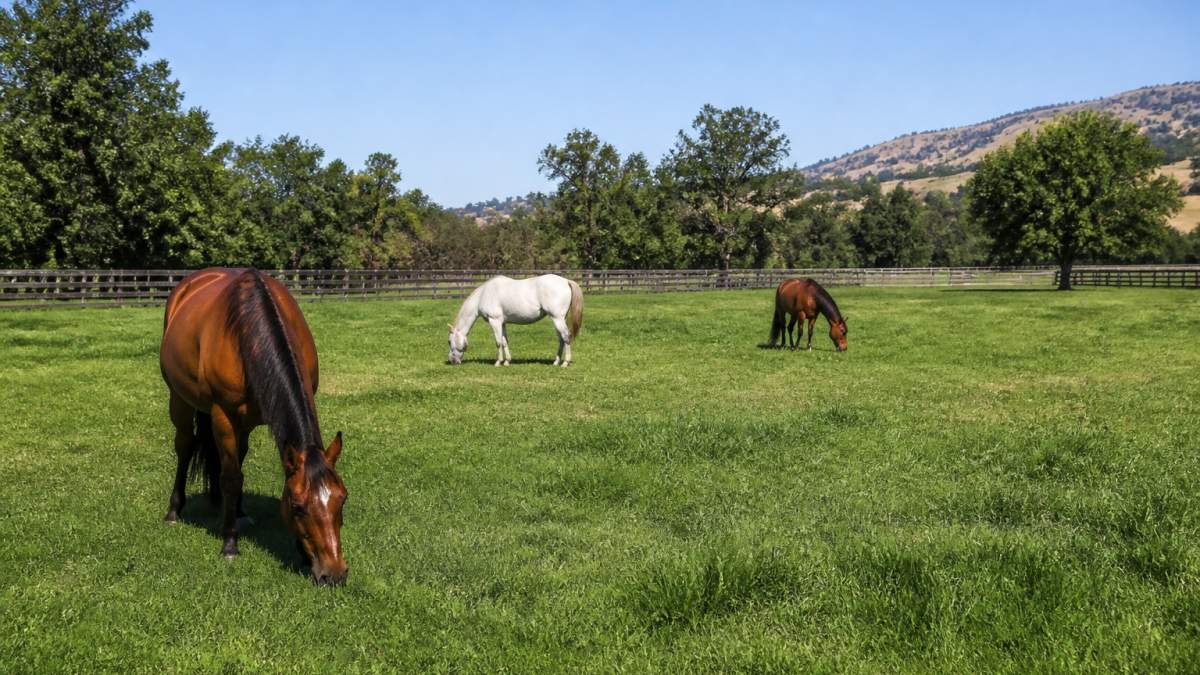
Walk the property during the growing season. Look at the grass closely. Are there weeds? Bare patches? Does the grass look thick or thin? Dense, green pasture tells you the soil is working.
Ask the seller how long animals have grazed there. If cattle or horses have lived on the land for years, the pasture has been tested. New properties with no grazing history are unknowns. You might inherit hidden problems.
Soil Composition and Drainage
Soil determines whether grass grows or mud spreads. Heavy clay soil holds water and creates boggy areas. Sandy soil drains too fast and doesn’t hold nutrients. The best pasture sits on loam, a mix of clay, sand, and organic matter.
Drainage is critical in wet seasons. Walk the property after rain if you can. Do puddles form? Does water run off quickly or pool? Poor drainage kills grass and creates mud, which means more work maintaining pasture and higher injury risk for horses.
If the property has been used for cattle or horses before, look for patterns. Areas where animals congregate, near gates or water, often show compaction and wear. These spots recover slowly and need rest.
Terrain and Usable Grazing Area
Steep slopes limit grazing. Horses struggle on very steep ground and can slip or injure themselves. Gentle slopes work fine. Flat land is ideal but rare in many areas.
Count the truly usable acres. A property listed as ten acres might have only six or seven acres of actual grazing land. Rocks, wetlands, thick brush, and steep banks don’t count. Ask the seller or a local rancher what the realistic grazing acreage is.
Elevation and climate affect growth too. Higher elevations have shorter growing seasons. Shaded areas under trees stay wet longer. South-facing slopes dry faster and grow earlier in spring. These details matter when you’re planning when to turn horses out or when to move them between pastures.
Check Fencing, Containment, and Safety
Fencing is your daily responsibility. Good fencing keeps horses safe and contained. Bad fencing creates constant headaches and safety risks. A horse can escape through gaps, get tangled in broken wire, or injure itself on rough edges.
Walk every fence line. Look for sagging sections, broken rails, missing boards, or gaps at the bottom. Wire fencing should be tight and free of rust or kinks. Wooden fencing should be solid with no splintered or rotting posts.
Check gates carefully. They should open and close smoothly without binding. A gate that sticks gets left open, and horses get out. Hinges and latches should be solid and easy to use in bad weather.
The type of fencing matters for horse safety. Smooth wire or wood rail fencing works well. Barbed wire is dangerous for horses and should be avoided. Woven wire can trap hooves. Electric fencing alone isn’t enough to contain a determined horse.
Broken fencing is your first escape route. A single loose board or gap becomes a horse’s exit. Check fencing before you commit to buying, repair costs add up fast.
Look at how pastures are divided. Can you separate horses if needed? Can you move them between grazing areas? Good internal fencing gives you flexibility. Poor division forces you to keep all animals together, which limits your options.
Inspect the Barn and Arena Facilities
The barn is where you spend time daily. A well-built barn protects horses from weather, gives you shelter to work, and stores equipment safely. A poorly designed barn creates problems every single day.
Barn Layout and Stall Condition
Walk through the barn and look at stall size. Stalls should be at least 12 by 12 feet for average horses. Smaller stalls stress animals and make cleaning harder. Taller horses need even more space.
Check the stall floors. Are they level? Do they drain? Wet, uneven floors cause joint problems and make horses reluctant to lie down. Good stalls have solid footing, rubber mats over sand or gravel work well.
Look at the walls and gates. Stalls should have smooth surfaces with no sharp edges or protruding bolts. Horses panic and injure themselves on rough materials. Gates should swing freely and latch securely.
Count the stalls honestly. If you plan to keep three horses, you need at least three stalls. Shared stalls don’t work, horses need their own space. Extra stalls give you flexibility for sick animals or visiting horses.
Aisleway, Ventilation, and Storage
The aisleway is your main path through the barn. It should be wide enough to lead a horse safely and move equipment easily. Narrow aisles create handling problems and waste time.
Ventilation keeps the barn healthy. Poor ventilation traps moisture and ammonia from urine. This causes respiratory problems in horses. Look for windows, vents, or openings that let air flow. The roof should allow moisture to escape.
Storage space is often overlooked but crucial. You need room for hay, grain, tools, tack, and supplies. Estimate how much hay you’ll store. A horse eats about two tons per year. Three horses need six tons. That takes serious storage space. Damp hay molts and loses nutrition. Dry storage protects your investment.
A wash rack is helpful if the property has one. It saves time cleaning muddy horses. Water access matters, you need reliable water pressure and drainage.
Verify Water Supply and Reliability
Horses drink 5 to 10 gallons daily depending on weather and activity. A reliable water source is non-negotiable. Without it, you’re hauling water constantly.
Check where water comes from. Is it a well, spring, creek, or municipal line? Wells are common in rural areas. Ask how deep the well is and whether it’s reliable year-round. Some wells run dry in drought.
Test the water flow. Turn on faucets and see how fast water comes. Low pressure makes filling troughs slow. Frozen pipes in winter are a real problem in cold areas.
Look at water troughs and pipes. Are they clean and in good condition? Rusty pipes or algae-filled troughs need replacing. Automatic waterers save time but require electricity and maintenance.
Water quality matters too. Cloudy, discolored, or foul-smelling water suggests problems. Most horses won’t drink bad water. If the property has had animals before, ask about water quality issues.
Water is your biggest daily need. Without reliable water, nothing else about the property matters. Confirm the system works before buying.
Confirm Electricity and Utilities
Electricity powers pumps, lights, and equipment. A property without adequate electrical service limits what you can do. You’ll struggle with water systems, barn lighting, and heated water troughs in winter.
Look at the electrical service. Is it sufficient for your needs? A basic setup might have 100 amps.
Check where power comes from. Is it buried underground or on poles? Underground is safer and less vulnerable to weather damage.
Look for outlets in the barn and pasture areas. You’ll need power for lights, fans, and equipment. Insufficient outlets force you to use extension cords everywhere, which is dangerous and inconvenient.
Propane or natural gas might be available. This helps with heating water or the barn in winter. Ask about availability and reliability.
Phone and internet service matter if you work from home or manage the property remotely. Cell service can be spotty in rural areas. Ask neighbors about coverage before buying.
Use a Horse Property Checklist Before You Commit
Before making an offer on any horse property, evaluate it systematically. A checklist keeps you from missing critical details when you’re excited about a place.
| Evaluation Area | What to Check | Why It Matters |
|---|---|---|
| Acreage | Total land and usable pasture acres | Determines how many horses you can keep |
| Pasture | Grass quality, drainage, soil type | Affects horse health and feed costs |
| Fencing | Condition, type, safety, division capability | Containment and daily safety |
| Barn | Stall size, ventilation, storage space | Daily horse care and equipment protection |
| Water | Source, reliability, quality, flow | Essential for horse health |
| Electricity | Service capacity, outlets, accessibility | Powers equipment and barn systems |
| Layout | Property flow, access, facility placement | Affects daily work and efficiency |
Walk the property multiple times at different times of day. Morning light shows different details than afternoon. Wet weather reveals drainage problems. Talk to neighbors about seasonal issues you might not see in a single visit.
Ask the seller direct questions about problems they’ve experienced. How do pipes freeze? When does the well run low? What repairs have they made? Honest answers help you plan your own maintenance.
Consider hiring a professional to inspect the facilities if you’re uncertain. This costs money upfront but saves expensive mistakes later.
Visit the property at least twice before deciding. Once in good weather and once in rain or snow. You’ll see how the land handles water and what maintenance challenges appear in different seasons.
Conclusion
Finding the right horse property means looking beyond the listing photos. You’re evaluating land, facilities, water, utilities, and daily workflow. The best properties have healthy pasture, reliable water, good fencing, and a barn layout that fits your needs.
At Martinez Ranch Management & Real Estate, we understand what makes a horse property work. We’ve helped families and ranchers find properties in Tehama, Shasta, Siskiyou, and Butte counties that matched their specific needs. Many of our clients have found properties that weren’t on the open market, places that fit exactly what they were looking for.
If you’re ready to start looking, contact us. We can help you evaluate properties, ask the right questions, and find options that suit your horses and your lifestyle. Whether you’re buying your first horse property or expanding an existing operation, we’re here to guide you through the process.
Frequently Asked Questions
How much land do you need for horses?
The amount of horse property acreage depends on your climate, pasture quality, and how many horses you plan to keep. Healthy pasture in this region typically supports fewer horses per acre than irrigated land in other climates. Work with a local advisor to assess your specific property’s grazing capacity based on soil, water availability, and terrain.
What should you look for when evaluating a horse property checklist?
A solid horse property checklist covers acreage, pasture condition, fencing integrity, water access, barn layout, electricity, and facilities like arenas or wash racks. Walk the perimeter, check fence posts and wire, test water sources, inspect stall ventilation, and verify utilities reach all necessary structures.
What makes good horse pasture and grazing land?
Good horse pasture and grazing areas have healthy grass or legume growth, well-draining soil, gentle to moderate terrain, and adequate water sources. Avoid boggy areas, dense brush, or terrain with sharp drop-offs. Assess whether the land recovers well after grazing and whether soil compaction or erosion is visible. Local conditions vary, so inspect the specific property carefully.
What horse barn and arena features matter most?
A functional horse barn and arena includes stalls with good ventilation, safe aisleways, adequate headroom, secure tack and feed storage, and a wash rack if possible. An arena should have good footing, proper drainage, and safe fencing. Check that buildings are structurally sound, free from sharp objects, and oriented to minimize weather exposure. Barns in this region need protection from heavy rain and wind.