

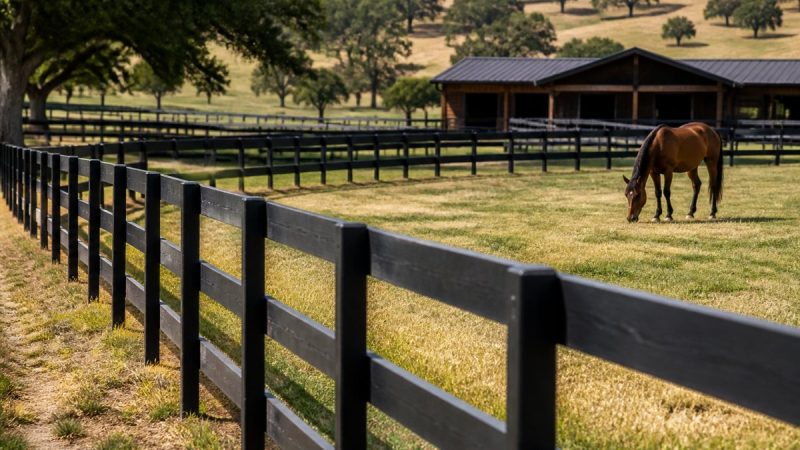
Last Updated: October 25, 2026
Quick Summary
Equestrian property fencing should be 4.5 to 5 feet tall with 4 to 6 inches of clearance at the bottom, built from materials like wood, wire, or vinyl matched to your site and horses. The right fencing keeps horses contained, prevents injuries, and defines your property boundaries.
- Standard horse fence height is 4.5 to 5 feet; taller athletic horses may need 5 feet or above
- Bottom clearance should be 4 to 6 inches to prevent horses rolling under or squeezing through
- Wood posts fail before rails, so use pressure-treated lumber rated for ground contact or naturally rot-resistant species
- Post spacing typically runs 6 to 8 feet for wire and 8 feet for wood rail, closer on slopes and in freeze-thaw zones
- Inspect fencing seasonally: spring for heaved posts, summer for sun damage, fall before winter weather
Table of Contents
- Why Fencing Matters for Equestrian Properties
- Horse Fence Height Standards and Why They Vary
- Safe Fencing for Horses: Materials and Design
- Horse Fencing Materials: Durability and Maintenance
- Horse Pasture Fence Layout and Property Planning
- Post Spacing, Visibility, and Containment
- Finding an Equestrian Property with Proper Fencing
- Frequently Asked Questions
Why Fencing Matters for Equestrian Properties
Good fencing is the foundation of a safe equestrian property. Without it, horses escape, get injured, or wander onto neighbors’ land.
The right equestrian property fencing keeps horses contained, prevents injuries, and defines your boundaries.
Fencing isn’t one-size-fits-all. A small turnout paddock has different requirements than a large breeding pasture, and young, athletic horses need sturdier containment than calm older animals.
Horse Fence Height Standards and Why They Vary
The standard recommendation for horse fence height is 4.5 to 5 feet at the top rail, which contains most horses reliably while staying practical to build and maintain. The ideal height depends on the horse’s size, temperament, and what you’re containing.
Larger, athletic, and younger animals may need the higher end or above; a Thoroughbred or Warmblood at 16 hands or taller can jump 5 feet if motivated. Smaller, older, and calm horses may be safely contained at 4.5 feet. For full-time pastures, taller is safer.
The bottom matters as much as the top. Horses can roll under or squeeze beneath fencing with too much clearance.
Horses are prey animals and spook at sudden movement or unclear barriers. Solid fencing or closely spaced rails block the view of movement outside the pasture, keeping horses calmer; gaps make them anxious and more likely to test the fence.
Fence height and clearance requirements depend on the horses you’re containing and how you plan to use the pasture.
| Use or Horse Type | Recommended Height | Bottom Clearance | Key Reason |
|---|---|---|---|
| Most horses, full-time pasture | 4.5 to 5 feet | 4 to 6 inches | Reliable containment, safe clearance |
| Larger, athletic, younger horses | 5 feet or above | 4 to 6 inches | Taller animals and jumpers need height |
| Smaller, older, calm horses | 4.5 feet | 4 to 6 inches | Lower height still contains safely |
| Foals and weanlings | Height less critical | Tight gaps, no sharp edges | Small animals slip under or through gaps |
| Breeding stock with foals | Standard height | Sized to smallest animal | Foals can catch legs in large gaps |
Safe Fencing for Horses: Materials and Design
Choosing the right material is about balancing safety, durability, visibility, and maintenance. Each option has trade-offs, and what works for one property may not suit another.
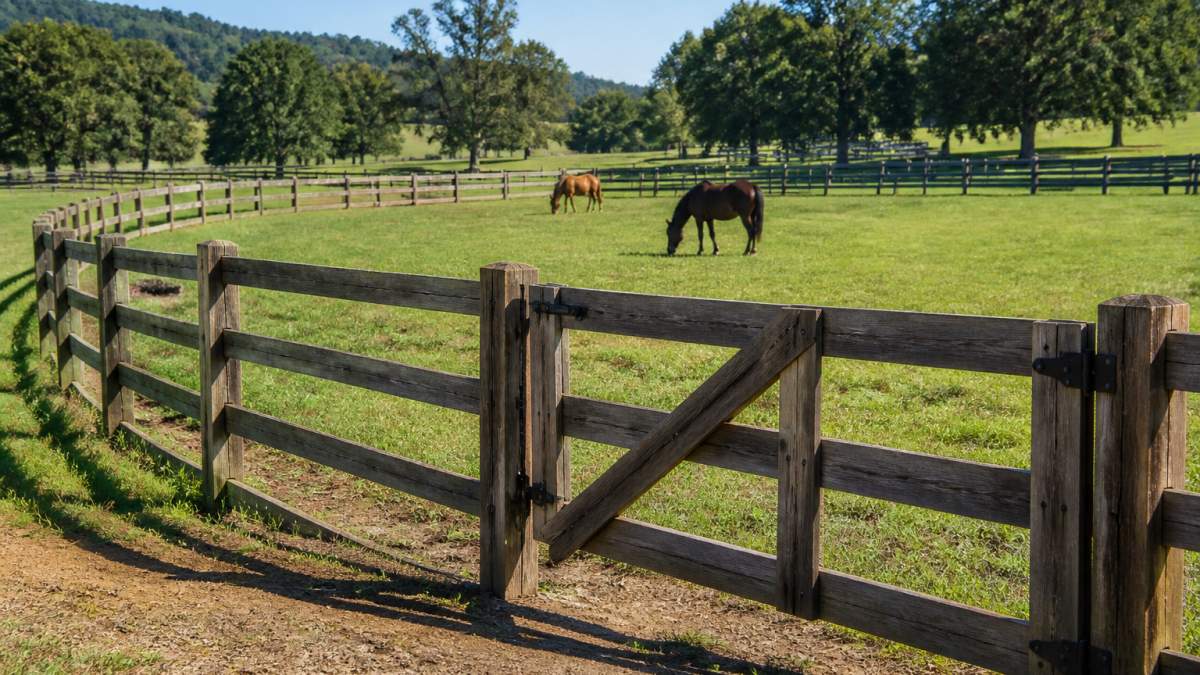
Wood Fencing
Wood is the traditional choice for equestrian property fencing and remains popular because horses respect it and it looks good.
The downside is maintenance. Wood requires regular inspection, repair, and often refinishing to prevent rot, and it fails faster in wet climates.
For wood fencing, use pressure-treated lumber rated for ground contact, or naturally rot-resistant species like redwood or cedar.
Wire and High-Tensile Options
High-tensile wire is strong, visible, and lower-maintenance than wood, and woven wire or multi-strand electric fencing can contain horses effectively if properly installed and maintained.
The risk with wire is entanglement: a leg caught in sagging or damaged wire can cause serious injury.
Electric fencing works well as temporary or secondary containment, especially for dividing pastures or creating paddocks, and horses learn to respect it quickly.
Synthetic and Vinyl Fencing
Vinyl and composite fencing offers low maintenance and durability. It doesn’t rot, splinter, or need painting, and it’s highly visible. The trade-off is higher initial cost and potential brittleness in extreme cold.
Vinyl works well for smaller areas like round pens or arenas where you want a clean look and minimal upkeep, but it can be prohibitive for large pasture perimeters.
Horse Fencing Materials: Durability and Maintenance
Lifespan numbers on a fence spec sheet assume a generic climate. In Tehama, Shasta, Siskiyou and Butte counties, valley properties bake through long, dry summers with intense sun on south- and west-facing rails, while foothill and mountain properties take snow load, freeze-thaw cycles, and spring saturation. A fence that lasts decades in one spot can fail early in the other.
What Actually Fails First
On almost every horse fence, the post fails before the rail. Wood posts rot at the ground line, which is why pressure-treated posts rated for ground contact, or naturally rot-resistant species, matter more than rail material.
Rails fail differently. Wood checks, cracks, and splinters with sun and dry air; wire sags when tension is lost or posts shift; vinyl and composite can crack in hard cold or fade under UV.
Material-by-Material Durability
Wood. In dry valley conditions, a well-built wood fence with ground-contact posts and good airflow holds up for many years; in a wet, shaded site it breaks down faster.
High-tensile and woven wire. Wire is long-lived when tension is maintained and posts are solid.
Electric.
Vinyl and composite. Low routine upkeep, but check for cracking after hard freezes and posts loosening in saturated spring ground.
A Maintenance Rhythm That Fits the Seasons
Tie inspection to the seasons that stress the fence:
- Spring, after snowmelt and ground saturation: walk the line for heaved or leaning posts, sagging wire, and washouts at low spots and drainage crossings.
- Summer, after the dry push: check wood for new checks and splinters, confirm electric voltage under full vegetation load, and look for sun-cracked vinyl.
- Fall, before winter: tighten wire, replace broken boards, clear limbs that will drop snow onto the fence, and confirm gates latch cleanly with cold-weather swelling.
Keep a simple log of repairs. Over a few seasons it shows which runs are chronic problems and may need a rebuild rather than another patch.
Walk the fence line on horseback or on foot at horse eye level, not from a truck. You will spot protruding nails, loose wire ends, and low sag that you miss from the cab.
Matching Material to the Job
A single property often needs more than one material: a sturdy wood or wire perimeter, electric cross-fencing for rotational grazing, and a visible vinyl or composite pen near the barn is a common mix.
Durability comes down to three things: the right material for the site, a post system built to hold, and inspection timed to the seasons that stress it.
Horse Pasture Fence Layout and Property Planning
Before you build a single fence, map out the whole property: perimeter fencing, internal divisions, gates, and access routes. Poor planning leads to inefficient pastures, difficult horse movement, and safety hazards.
Perimeter Versus Internal Fencing
Perimeter fencing defines your boundary and contains horses on your land. Internal fencing divides pastures, creates paddocks, or separates groups of horses.
The perimeter should be continuous and well-maintained, since gaps or weak sections invite escape attempts.
Place water and shade in every pasture. In a large divided pasture, put water sources so horses don’t have to travel far, which reduces fence pressure and keeps animals healthier.
Gates, Access, and Emergency Planning
Gates are the most-used part of any equestrian property fencing system and where problems often start.
Plan for emergency access. If a horse is injured or a fire starts, you need to move animals quickly, so position gates so horses can reach a safe area without tight turns or obstacles.
Plan for feed delivery, hay trucks, and veterinary vehicles.
Post Spacing, Visibility, and Containment
Post spacing is a structural decision. Too far apart and rails sag, wire loses tension, and gaps open at the height where a horse will test them; too close and you spend more on material and labor than needed. The right spacing depends on material, terrain, and what you’re containing.
Spacing by Material and Terrain
As a working rule, wood rail fencing is commonly set on 8-foot centers, and wire on 6- to 8-foot centers. Those are starting points, not absolutes:
- Slopes: closer spacing on grades keeps rails from sagging and posts from pulling. A fence that is fine on flat ground can look tired on a hillside within a season.
- Frost and saturated ground: in mountain and foothill country, posts heave and lean where the ground freezes and thaws or stays wet in spring. Deeper set and closer spacing on those runs pay off.
- Corners and gates: these carry the most load and need deeper, stronger footings than line posts. A weak corner pulls the whole run out of line.
Rail Gaps and the Foal Problem
The space between rails matters as much as post spacing. A common guideline is no more than about 12 inches between the top and middle rails and about 18 inches between the middle and bottom rails. The reason is foals and ponies: a gap wide enough for a small head or leg to pass is a gap that catches animals.
Visibility and Horse Behavior
Horses are prey animals. A fence they can see clearly is one they respect; a fence they can’t see is one they run into. Solid wood and closely spaced rails read as a wall. Wire needs help: white-painted posts, electric tape, or visible top rails make the line obvious, especially at dusk and in blowing snow.
Containment by Use Case
Different horses need different fences:
- Foals and weanlings: the priority is small gaps and no sharp edges, not height. A foal can slip under or through a fence sized for adult horses.
- Stallions: sturdier, taller, and with stronger corners and gates, because they test fences harder and more often.
- Ponies and small horses: height can be lower, but gaps still need to be tight.
Planning the Layout Before You Build
Before a post goes in, map the whole property: perimeter, internal divisions, gates, water, shelter, and vehicle routes. A few habits save years of frustration:
Spacing, gap size, visibility, and layout work together. Get the spacing and gaps right for your smallest animal, make the line visible, and plan gates and lanes for real-world access, and containment takes care of itself.
If you are considering a property, walk the fence at horse eye level and check corners, gates, and low spots first, those are where problems show. See how proper equestrian fencing is implemented at Bowman Road Ranch, a current listing that demonstrates quality fencing and layout in practice. To see how well-planned equestrian layouts look in practice, browse our equestrian properties in Northern California.
Finding an Equestrian Property with Proper Fencing
When considering an equestrian property, walk the entire perimeter and look for sagging rails, loose posts, gaps, or damage.
Ask the seller or agent about fencing age and maintenance history.
Consider whether the layout suits your intended use.
We’ve helped clients find equestrian properties across Tehama, Shasta, Siskiyou, and Butte counties. Browse available equestrian properties that meet these fencing standards and layout requirements.
Browse available equestrian properties that meet these fencing standards, or view our current listings to see examples of well-designed equestrian facilities in the region.
Proper equestrian property fencing requires planning, quality materials, and maintenance. If you’re looking for an equestrian property with good fencing or want to discuss a property you’ve found, contact us.
Frequently Asked Questions
How tall should a horse pasture fence be?
Most horse pastures need fencing at least 4.5 to 5 feet tall to contain horses safely. Taller athletic horses or those prone to jumping may require 5 to 5.5 feet. The height should reach approximately the horse’s withers or slightly higher. Check with your local county extension office for any specific height requirements in your area, as regulations can vary by location.
What type of fencing is safest for horses?
Safe fencing for horses eliminates sharp edges, gaps, and rigid materials that cause injury. Wood fencing with smooth rails, high-tensile wire with appropriate spacing, and vinyl or synthetic options all work well when properly installed. Avoid barbed wire and ensure posts are smooth. The best choice depends on your budget, climate, and maintenance capacity. Visibility is also critical, horses need to see the fence line clearly to avoid running into it.
What should I look for in horse fencing materials when buying an equestrian property?
When considering an equestrian property, look for rot or damage in wood, rust or loose wire in metal fencing, and cracks in synthetic materials. Check that posts are firmly set and spaced appropriately (typically 8 to 10 feet apart). Ensure the fence height meets safety standards and there are no sharp edges or protruding nails. Ask the seller about maintenance history and how long the current fencing has been in place.
How do you plan fence lines for horse pastures?
Start with a property map and identify perimeter boundaries. Decide whether you need one large pasture or multiple smaller paddocks for rotation or separating horses. Plan internal dividing fences to create manageable sections, typically 1 to 5 acres each depending on your operation. Include gates at logical access points and allow space for emergency exit routes. Consider water access, shelter locations, and traffic patterns. Walk the property with your plans to ensure the layout is practical before installation.
How far apart should fence posts be for a horse pasture?
Fence posts for horse pastures are typically spaced 8 to 10 feet apart. Closer spacing (6 to 8 feet) provides more rigidity and is often preferred for high-tensile wire or where horses are more active. Wider spacing (10 to 12 feet) works for sturdy wood rail fencing. The spacing depends on the material type, terrain, and the strength of your posts. Always ensure posts are set deep enough in the ground, at least 2 to 3 feet, to withstand pressure from horses leaning or pushing against the fence.
Do I need different fencing for different horses?
Yes, fencing requirements can vary based on horse size, temperament, and intended use. Larger or more athletic horses may need taller fencing and stronger construction. Young or high-strung horses benefit from more robust designs and better visibility. Pasture horses can tolerate slightly less rigid fencing than performance or breeding horses. If you plan to house multiple horse types on one property, design your fencing to meet the highest safety standard needed, which protects all horses on the property.
